In today’s increasingly global and digital world, it’s more common than ever to work with people who speak different languages – whether that’s in business, healthcare, HR, or training.
That’s where remote interpreting services come in.
With professional remote interpreting, there’s no need for an interpreter to be physically present. This avoids travel costs and travelling time, which reduces the cost significantly. Our solutions enable reliable communication via video or phone, wherever you are. This not only provides greater flexibility, but also reduces costs and simplifies logistics, whilst maintaining the same high standards of clarity, accuracy, and professionalism.
Remote interpreting also works just as effectively in larger settings, such as conferences, webinars, and virtual events, where interpreters can join remotely and support multilingual communication in real time.
But what exactly does that look like in practice – and which type of interpreting is right for you?
Remote interpreting explained
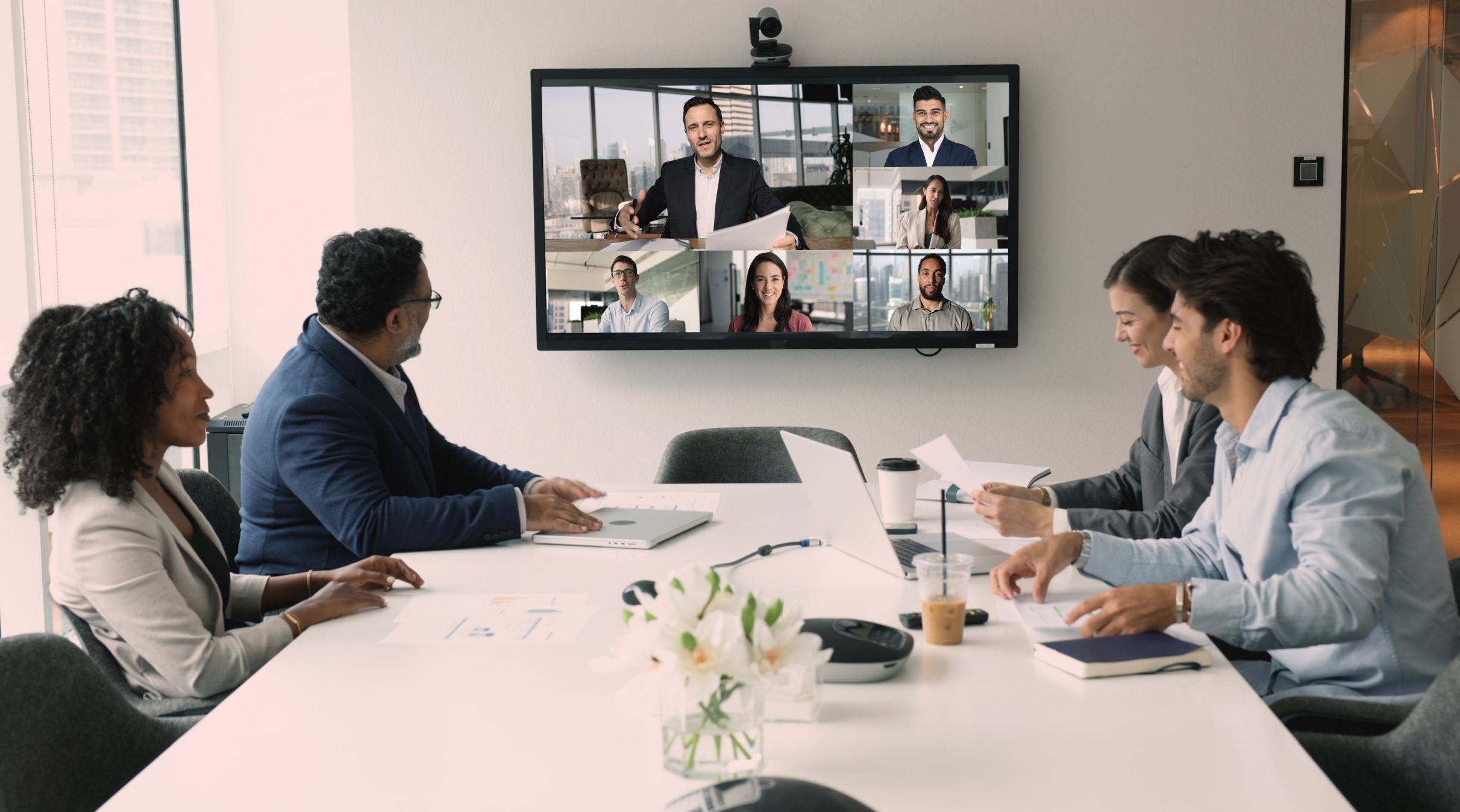
Remote interpreting is a professional language solution that enables real-time communication between speakers of different languages via video or telephone, facilitated by a qualified interpreter. The interpreter joins the conversation remotely and ensures that everything being said is understood accurately, including tone, intent, and cultural nuance.
One of the biggest advantages of remote interpreting is how adaptable it is. It’s commonly used for one-to-one conversation or a larger group session across a wide range of industries including:
- Business and corporate environments
- Healthcare and medical settings
- HR and employee support
- Legal and compliance contexts
- Education and training
What are the main types of remote interpreting services?
There are several ways remote interpreting can be delivered, depending on your situation.
- Video Remote Interpreting (VRI)
Video interpreting allows an interpreter to join your meeting through platforms like Zoom, Microsoft Teams, or Google Meet. Because participants can see one another, communication feels more natural and dynamic. Beyond the spoken words, visual cues such as facial expressions, reactions, and tone of voice enhance understanding and support more effective interaction.
- Over-the-Phone Interpreting (OPI)
Phone interpreting is communication supported by an interpreter over the phone. It’s a straightforward and effective option when video isn’t needed, and it works well for more practical, day-to-day conversations. VRI and OPI are now widely used across global teams within all industries, healthcare services and online training and webinars. As organisations continue to work more digitally, remote interpreting is becoming one of the most practical and scalable solutions available.
Choosing the right remote interpreting service
At its core, interpreting is about understanding – not just words but meaning. Not all interpreting services are the same, so it’s important to choose a provider that understands your requirements.
Things to look for include:
- Experienced, qualified interpreters
- Industry-specific knowledge
- Ability to work with your preferred platforms
- Strong confidentiality standards
Different types of interpreting explained
While remote interpreting is becoming increasingly popular, it’s just one part of a wider range of interpreting services. The right approach often depends on the setting, number of participants, and level of interaction required.
Here are some of the most commonly used types of interpreting:
- Consecutive Interpreting – In consecutive interpreting, the speaker talks for a short time and then pauses while the interpreter relays the message. This is often used in business meetings, legal settings, medical consultations, etc. It’s known for its accuracy, but it can take a little more time as the conversation happens in stages.
- Simultaneous Interpreting – Simultaneous interpreting happens in real time, with the interpreter translating as the speaker is talking. This is typically used for conferences, large-scale events and international meetings. It allows communication to flow naturally without pauses but requires highly skilled interpreters and the right technical setup.
- Liaison (Business) Interpreting – Liaison interpreting is a more conversational style, where the interpreter supports back-and-forth communication between participants. You’ll often see this in negotiations, site visits and small meetings. It’s particularly useful when building relationships and ensuring both sides fully understand each other.
- On-Demand Interpreting – On-demand interpreting is another form of remote interpreting that provides immediate access to an interpreter, often via dedicated platforms or apps. This service is well suited to handling high volumes of interpreting calls, as it provides flexibility and immediate access when needed.
If you’d like to explore how interpreting could work for your organisation, you can learn more about our remote interpreting services (VRI & OPI) and how we support businesses across different sectors, or get in touch with our team to discuss your requirements.


